Real Kindness
Is Criticism
From an
Aesthetic Realism Public
Seminar
by
Lynette Abel
At age twenty,
if someone
had asked me if I wanted to be kind, I certainly would have said yes,
but
I didn't feel I was kind. Though I could go out of my way to help
a friend, I essentially felt I was selfish and cold to people--my
college
roommates, my family, the men I knew. I was longing to know, what
I have learned from Aesthetic Realism: that real kindness is a critical
and intellectual achievement that makes for the happiness and
self-respect
we are hoping to have. In his great work Definitions, and
Comment:
Being a Description of the World, Eli Siegel explains:
"Kindness is that in a self
which wants other
things to be rightly pleased....To be kind is honestly to think of what
another person, or other persons, truly desire. If we do not take
the trouble to find this out, or do not want to take the trouble, our
"kindness
is so much not kindness. Kindness is accuracy...."
Aesthetic Realism teaches
that every person's deepest desire is to like the world. And in
order
to be kind, I learned, we have to be critical, to want to know and be
for
what will strengthen a person's like of the world and be against that
which
weakens every person most, the desire for contempt, "the lessening of
what
is different from oneself as a means of self-increase as one sees
it."
The greatest kindness came to me from Eli Siegel and Realism: when I
heard
exact criticism of my contempt, my life began anew. I was able to
see people and things, at last, in a way I could be proud of.
The Mix-up about Kindness
Begins Early
Growing up,
in Alexandria, Virginia, I came to have the customary notion of
kindness
as doing nice things, like offering to wash the dishes or lending a
skirt
to my sister. I equated kindness, as many people do, with getting
praise and giving it.
And I used
my family’s praise to feel I was special and I had a right to look down
on other people.
I remember
many times driving through an area called Gum Springs on my way to
downtown
Alexandria. The people who lived there were very poor and their
houses
were dilapidated shacks, many with broken windows and some without
doors.
I remember thinking scornfully about them: I was callous to the depths
of other people, whom I saw as so different from myself. That
people,
fellow human beings, had to endure these deplorable conditions is
shameful!
The fact is, that they were forced to, as people are today, because of
an unjust, brutally unkind economic system which allows only some
people
to live comfortably while others live in abject poverty. And I
needed
so much to know what Eli Siegel explains in his lecture Mind and
Kindness:
"Deep in the meaning of the
word kind is
a feeling that through being born there is a relation to everything
which
is also born or existing....Any person who isn't kind, in the real
sense
of the word, is a person who is hurting himself. I mean by kind,
a proper awareness of all things that are in any way like you."
I did not have "a proper
awareness" of the feelings
of people--my friends, men I knew, my family. And I didn't know
that
my unkindness was the reason I felt painfully nervous around just about
everyone.
At Florida
State University, I studied English literature and sociology, but I
also
was after glory for myself and wanted to forget about the world.
This took in how I saw men. Like my family, I saw men as existing
for the purpose of praising and making me important. When my
boyfriend,
Tom Welsh, was drafted during the Vietnam war, and stationed in the
Pacific
Islands, though we had discussed marriage, he wanted to wait until he
got
back. Instead of being interested in what, for instance, he felt,
and how I could encourage him, I was hurt and felt I had a right to be
unkind. So while I wrote him praising letters, telling him how
much
I loved and missed him, all along I was dating other men. But as
I went after what I saw as the most glorious thing--having a number of
men interested in me at once, I disliked myself intensely. I felt
agitated and my thoughts were so distracted that I couldn't concentrate
on my studies.
One
day I received
a flattering poem from Tom titled "To the Woman I Love," which began:
"I
love a beautiful woman, a woman who loves,” and ended, "The woman I
love
is complete...." Though this was what I thought I wanted to hear
most from a man, after I read it, I felt awful. I knew it wasn't
really me he was describing, and I thought he was foolish. What I
was desperate for was not utter praise, but accurate criticism of where
I was unjust. I met this some years later in Aesthetic
Realism.
We Are Looking for
Criticism
For example,
in a class Mr. Siegel explained centrally what had caused me so much
pain:
"You can participate in something while not believing in it--isn't that
a description of your life, Miss Abel?" It was. In another
class, he asked me: "Do you think your chief hurt in life comes from
having
two motives: justice and glorification?" "Yes" I replied.
He
said: "Justice should always win over glorification, because
glorification
is a garbage can....You will never feel good unless you feel kindness
and
good will are good sense."
I thank
Eli Siegel and Aesthetic Realism for enabling me to change from an
uninterested,
self-absorbed person, to a person who now sees wanting to know
and
strengthen other people, including my husband, Michael Palmer, as a
kind
necessity and pleasure.
Jane Addams' Life
Shows Real Kindness
Is Criticism
Eli Siegel
defined kindness as: "that in a self which wants other things to be
rightly
pleased." And in the comment to it, he explains: "A person is
kind
who feels a sense of likeness to other things; who accepts accurately
his
relation to other things." These sentences comment deeply on what
impelled
the important American social reformer, Jane Addams, who lived from
1860-1935.
She showed in a big way, from which every person can learn, that we are
kind when we are critical of injustice wherever it is. In 1889,
with
Ellen Starr, she founded Hull House, in Chicago's West Side slums, one
of the first social settlements in the United States. She felt
there
were basic necessities every person deserved to have, and it was her
obligation
to have people get them. "It is natural to feed the hungry and
care
for the sick," she wrote of her purpose. "It is certainly natural to
give
pleasure to the young, [and] comfort the aged...." Jane Addams
saw
the feelings of immigrant workers as real--something many people did
not--how
their lives were being brutally exploited for profit in Chicago's
factories.
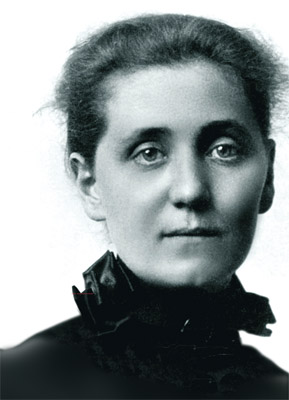 Jane
Addams was born
in 1860 in Cedarville, Illinois, the eighth child of Sarah and John
Addams.
When she was two years old, her mother died, after giving birth to her
ninth child. Her father, who was a member of the state senate,
was
a friend of Abraham Lincoln and was himself a fervent
abolitionist.
He remarried when Jane was seven. Their family was well-off and
Jane
had many advantages other children didn't. In her autobiography,
Twenty Years at Hull-House, she tells of being shocked when, as a
little girl, she saw "horrid little houses" in a neighboring
town.
Unlike how I wanted to feel superior to people, when Jane saw the
hideous
conditions in which some persons were forced to live, she was critical
and asked, "what could be done to make them less horrid?" She
wanted
them "to be rightly pleased." Jane
Addams was born
in 1860 in Cedarville, Illinois, the eighth child of Sarah and John
Addams.
When she was two years old, her mother died, after giving birth to her
ninth child. Her father, who was a member of the state senate,
was
a friend of Abraham Lincoln and was himself a fervent
abolitionist.
He remarried when Jane was seven. Their family was well-off and
Jane
had many advantages other children didn't. In her autobiography,
Twenty Years at Hull-House, she tells of being shocked when, as a
little girl, she saw "horrid little houses" in a neighboring
town.
Unlike how I wanted to feel superior to people, when Jane saw the
hideous
conditions in which some persons were forced to live, she was critical
and asked, "what could be done to make them less horrid?" She
wanted
them "to be rightly pleased."
We Need Criticism to Be
Kind
In
her autobiography, Jane Addams tells of something that had a big effect
on her whole life. When she was 11, Jane came into her father's
room
and found him looking very solemn. He told her that Joseph
Mazzini,
the great Italian patriot, was dead. She grew argumentative,
asserting
that he didn't know Mazzini, and that Mazzini was not American, so why
should we feel so bad? Her father was critical, and told her that
the feelings of people in another country had very much to do with the
feelings of people in Illinois--just as there were "...men who are
trying
to abolish slavery in America," there were men trying to "throw off
Hapsburg
oppression in Italy." She saw, she later wrote--though people may
"differ in nationality, language, and creed," they "shared large hopes
and like desires." She said, "I came out of the room
exhilarated."
Jane Addams
graduated valedictorian from Rockford Seminary in 1881. As she
thought
about what she wanted to do with her life, she traveled throughout
Europe
for a number of years in what she described as a "feverish search after
culture." But she didn't want, she said, just an "intellectual"
life.
She was in a fight between the desire to be useful to people and a
certain
selfishness which she described as "a continued idleness...[a] going on
indefinitely with study and travel." Then one day, as a tourist,
she witnessed in London, a Saturday night auction of decaying
vegetables
and fruit to poor people and it changed her life. She wrote:
"We saw two huge
masses of ill-clad
people clamoring around two hucksters' carts. They were bidding
their
farthings and ha'pennies for a vegetable held up by the
auctioneer,...one
man...had [bid for] a cabbage, and when it struck his hand, he
instantly...tore
it with his teeth, devoured it, unwashed ...as it was....[T]he
impression
was...of myriads of hands, empty, pathetic, nerveless and
workworn,...clutching
forward for food which was already unfit to eat. I have never
since
been able to see a number of hands held upward, even when they are
moving
rhythmically in a calisthenic exercise, or when they belong to a class
of chubby children who wave them in eager response to a teacher's
query,
without...this memory, a clutching at the heart reminiscent of the
despair
and resentment which seized me then."
That
people had to depend
for their sustenance on decaying food enraged Jane Addams and she felt
an obligation to do something about it. In September of 1889, she
obtained a house on Halsted Street, in the slums of Chicago, and Hull
House
opened. In his great lecture, "Aesthetic Realism Looks at Things:
Seeing and Grabbing," Eli Siegel explains:
"Out of the feeling that owning
has been disproportionate...has
arisen the settlement movement,... Jane Addams...said that people were
dealt
with unjustly in terms of what they have and what other people have
grabbed."
Jane
Addams wanted
to bring comfort to persons who were poor, but more than that she
wanted
to get rid of poverty. Two important women, who worked with her
at
Hull House, were Florence Kelley, who did extensive investigation into
the horrible conditions of the sweatshops, and Dr. Alice Hamilton, who
became the foremost authority on work-related illnesses.
The
Chicago of 1889
was teeming with industry--meat-packing, banking, manufacturing; (it
isn't
today, but not different from today) there was vast wealth and vast
poverty.
Men and women worked 7 days a week, 12-14 hours a day, for wages they
couldn't
live on, and even little children worked long days for four cents an
hour.
The surrounding neighborhood was described by a Hull-House
investigator:
"...[L]ittle idea can be
given of the
filthy...tenements... and dilapidated outhouses, the piles of garbage
fairly
alive with diseased odors, and the numbers of children filling every
nook,
working and playing in every room,...pouring in and out of every
door...."
Hull-House
provided a day nursery and kindergarten to care for children of working
mothers, a public kitchen, an employment bureau, and cooperative
housing
for young working girls. A Theatre was begun and a music
school.
"In the first year, 50,000 people came to the house," Biographer James
Weber Linn wrote: "and it is no exaggeration to say that Jane Addams
talked
to most of them."
In his comment to the
Definition of
Kindness, Mr. Siegel writes:
"If [a person] has
the organic feeling
that the being pleased of other things is the being pleased of himself,
he is kind."
This
describes the feeling
Jane Addams had--there wasn't any job she saw as beneath her if it
meant
having people's lives better off. There were disease and death
resulting
from decaying garbage. Garbage collection was not being enforced,
and Jane Addams sent over 1,000 reports of violations of the law to the
health department, and she got the mayor to appoint her Garbage
Inspector.
Every day she was up at 6 am making sure the garbage collectors did
their
work, having to follow the loaded wagons to "their dreary destination
at
the dumps."
In an
Aesthetic Realism
class in 1976, Mr. Siegel spoke about the large meaning of obligation
and
he asked me "Do you have any obligation?" "Yes" I replied.
Eli Siegel.
Do
you think you owe anything to people?
Lynette Abel.
I think I
owe a great deal.
Eli Siegel.
If you were
on the subway and saw a woman ill, would you give her a seat?
Lynette Abel.
Yes....
Eli Siegel.
If you can
make anything stronger, would you want to do it? If there were a
smudge on the window would you want to brush it away?
Lynette Abel.
Yes.
Eli Siegel.
Obligation
comes from the desire to have the world better. Obligation is in
the nature of things; something can be better through something you
do.
Good will is a terrific obligation, present with every beat
of one's heart. It is the most beautiful thing in the
world....Every
person has to see obligation as expressing oneself.
Jane Addams felt
she had an obligation to have the world better. When she learned
at the first Christmas party at Hull-House, that a number of little
girls
refused candy, because they had been working 14 hours a day for 6 weeks
in a candy factory and couldn't bear to look at it, she was
shocked.
Then she learned of a boy who died in a factory accident which could
have
been prevented by a machine-guard costing a few dollars. Jane
Addams
wrote:
"We felt quite sure
that the owners
of the factory would share our horror and remorse, and that they would
do everything possible to prevent the recurrence of such a
tragedy.
To our surprise they did nothing whatever."
But Jane Addams did.
Through her work and
that of others, on July 1, 1903 the Illinois child-labor laws were
passed.
Relating Jane Addams' desire to uncover evil to the novelist Henry
James,
in the preface to James and the Children Mr. Siegel
writes:
"[Henry] James makes
the unseen less
unseen. Here he is with St. Francis, William Godwin,
Christ,
John Brown, William Cobbett, Jane Addams."
"Kindness Is Accuracy."
With all of
Jane Addams' kindness and usefulness, there was something big she did
not
see at the time of an important occurrance in the history of labor--the
Pullman Strike of 1894. George M. Pullman, owner of the Pullman
Palace
Car Company, built a town for his employees which they had to live
in.
Rents and services were exorbitant and biographer Allen Davis, writes
"most
of the apartments had no bathtub, [and] there was only one water faucet
for every 5 units." Seeing the lives and work of people as a
means
of making profit for oneself, I learned from Aesthetic Realism, is
hideous,
unkind contempt. When in 1893, Pullman laid off a number of
employees
and cut the wages of those who remained, the workers were forced to go
out on strike. They appealed to the American Railway Union, newly
organized by Eugene V. Debs for support, and got it. The boycott
of Pullman cars brought the entire national rail system to a
standstill.
Florence Kelley and Ellen Starr were out on the picket
lines.
President Cleveland sent in federal troops to break the strike.
34
people were killed, and over 700 were arrested, including Debs.
Jane Addams
did not want to see clearly, unequivocally that Pullman was unjust, but
instead referred to him as a "benevolent employer" and argued "there
was
blame on both sides...labor and management needed...to learn [to] work
together." She, like other social reformers, didn't see--what
only
Aesthetic Realism explains--that it was contempt which made for profit
economics and its horrible effects, and that this same contempt is in
every
self and needs to be criticized. In his lecture on Aesthetic
Realism
Looks at Things: Seeing and Grabbing, Eli Siegel explained "[The
Settlement
movement] was a way of admitting injustice, but not admitting it too
strongly."
In the late 19th century Jane Addams underestimated contempt; she was
wrong
in thinking employers could ever be fair to workers, while wanting to
make
a profit from them.
However, as
years went on, her interest "in what people deserve" became stronger,
not
weaker and extended out from Hull-House nationally and
internationally.
In 1912, Jane Addams seconded Theodore Roosevelt's presidential
nomination
at the Progressive party convention. "The Progressive Platform"
she
said "contains all the things I have been fighting for." In her
speech
she said:
"A great party has
pledged itself
to the protection of children, to the care of the aged, to the relief
of
overworked girls, to the safeguarding of burdened men."
In his
historic lecture
of June 12, 1970 called "What Is Working Now?" published in Goodbye
Profit System: Update Eli Siegel discusses the Progressive Party
platform,
placing its important ethical value. He explains:
"[T]he reason the
platform came to
be is the desire to have good will as power....It is part of this
century's
history, and it has gone to make what we have now: the inability of the
profit system to function the way it would like."
To
her credit
Jane Addams, felt she needed to do better. At a large dinner in
Chicago
in 1927, when many speeches were given praising her for "her age-long
quest
for self-respect" and "a better and kindlier world," she replied
self-critically:
"I am very grateful
for the affection
and interest you have brought here this evening; yet in a way
humiliated
by what you say I am, for I know myself to be a very simple person, not
at all sure I am right, and most of the time not right, though wanting
to be; ...I can only hope that we may go on together, working...for the
betterment of things,..."
In
an Aesthetic
Realism lesson of 1969 Eli Siegel spoke of what people are hoping
for.
I conclude my paper with these sentences from it:
"The need for
criticism, that is,
asking the world please world tell me where I'm incomplete is as fierce
as the desire for milk....In the full sense of the word the self is
comfortable
in two ways: 1) It should have food and heat enough, the other is that
its path seem to be fitting. For instance, let's say a person is
told "Look, you're on the wrong road now. That is the one you
want
to take." He had a notion before it might be the wrong road but
once
he's sure, he is more comfortable....Criticism and kindness are the
same
thing completely."

|